Showing posts with label Brigham. Show all posts

Monday, September 14, 2020

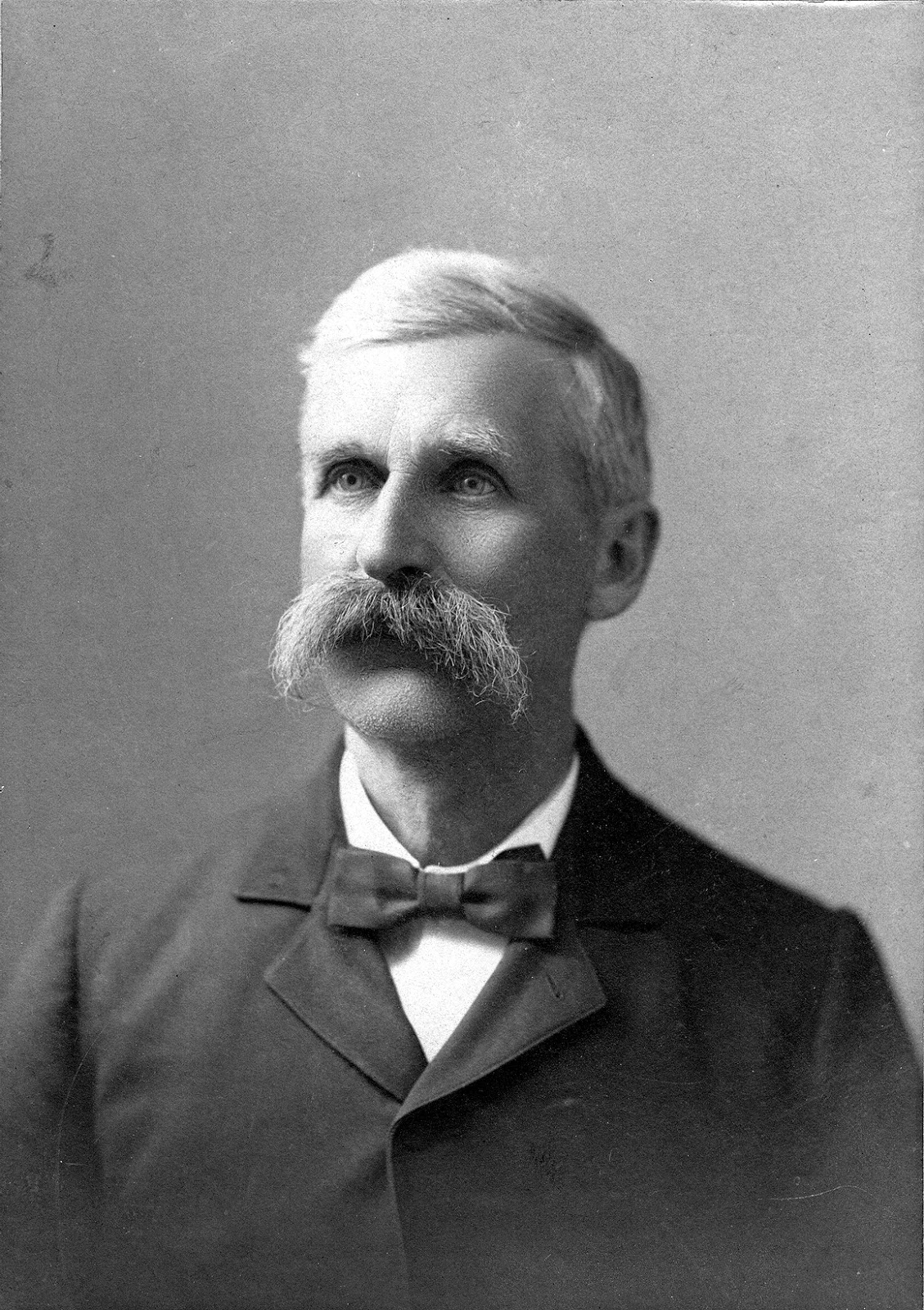
Phineas Brigham (1815 - 1889)


My relationship: Me > William R. Compton II > William R. Compton I > Mary Brigham > Phineas Brigham (2nd great-grandfather)

Phineas Brigham, son of Timothy and Patty (Damon) Brigham was born in Smithfield, Bradford, PA on 22 Jan 1815. His parents dying early when a mere child, he was placed in the family of William Baldwin, proprietor of the "Old Fountain Inn " near Wellsburg, NY (Chemung Co.), where he lived for several years. He ran away after a severe flogging, returned, and at last set out for the home of his uncle Salmon Brigham in Madison County, NY, working for his food and lodging on the way. Later he moved to Cazenovia, NY where he attended school in 1834 at the Cazenovia Seminary. He intended to prepare for the Methodist ministry, but after a brief experience as an exhorter, he abandoned the idea. 

He met Eliza Johnson, daughter of Ezekiel Johnson and Hannah Sloan of Cherry Valley, and married her there on October 10, 1838 where they lived at least until the early 1850's, with Eliza's mother.  They had five children, but three died young. One is unknown. Two sons, each named William, died young and are buried in the Cherry Valley Cemetery (William Brigham, born 1 June 1841, died 3 June 1842, and William Loomis Brigham, born 14 Feb 1851, died Jan 1853). The other 2 children were Mary Louise Brigham, born 11 Nov 1839 who became Mrs. Norris M. Compton,  and (Dewitt Clinton) Johnson Brigham born 11 Mar 1846, who went on to become the State Librarian of Iowa (1898-1936). In 1857, Phineas is listed as a clerk (insurance) in Elmira, NY, and again in 1860 in Elmira, house on Gray Street. By June, 1860, they had moved to Dix (Watkins), NY where Phineas is listed as a retail shoe merchant and Eliza as a milliner.

Eliza Johnson


On September 6, 1862 Phineas (age 47) enlisted at Palatine, NY as a Private in the Union Army. His son, Johnson Brigham also enlisted, but he was too young (age 16) for combat, and he was transferred to Washington, D.C. where he worked for the Sanitation Dept. during the war. Phineas was mustered into service on October 17, 1862 in the 153rd Infantry Regiment, Company B at Fonda, NY. The next day, the troops left by railroad traveling to New York City, then Philadelphia, then Baltimore, and then Washington, D.C.  A short steamer trip took them to Alexandria where they arrived at their camp on October 24. They encamped there for the next nine months. Alexandria Virginia was a vast depot of military stores. The Brigade was in charge of guard and police duty over these arms. They were often aroused from sleep forming in a line of battle across the different roads into the city remaining under arms until dawn to repel any attack from the Confederate forces, although none ever came. However, many of the men succumbed to disease, including typhoid, pneumonia, measles, and small pox. Phineas succumbed to malarial fever in October-November, 1862. He was treated for five weeks at a private home in Alexandria, and on December 10, 1862 was admitted to the Regimental Hospital in Alexandria. In July, 1863, he transferred to Washington, D.C. and was assigned as an assistant hospital steward at the Soldier's Retreat. In February, 1864, his regiment was ordered to New Orleans, but he was rendered unfit for active duty in the field and he remained in Washington. Due to his illness, Phineas was transferred to Company C of the U.S. Veteran Reserve Corps, 19th Infantry Regiment. On October 1, 1864 he was transferred to the Confederate Prison Camp at Elmira, NY for the remainder of the war, having charge of a hundred confederates there. This camp, in use from June 6, 1864 until autumn 1865, was dubbed "Hellmira" by its inmates. In the months the site was used as a camp, 12,123 Confederate soldiers were incarcerated; of these, 2,963 died during their stay from a combination of malnutrition, prolonged exposure to brutal winter weather and disease directly attributable to the dismal sanitary conditions on Foster's Pond and lack of medical care. The camp's dead were prepared for burial and laid to rest by the sexton at Woodlawn National Cemetery.  At the end of the war, each prisoner was given a loyalty oath and given a train ticket back home; the last prisoner left the camp on September 27, 1865. Phineas was honorably mustered out on July 13, 1865. [For details, see his Civil War pension file #286100]


After the war, he spent two years in Portage County, Ohio and then moved to Watkins, Schuyler, New York in April, 1868. In 1870 he is listed as Assistant Marshall for the town of Watkins, NY and signed all of the census pages for that year. Eliza is not listed there at that time. Financial and health stresses and struggles weighed on the marriage after the war and a formal divorce decree was issued to Eliza in Macon County, Missouri on 7 Nov 1870.


Myra Andrews


On January 6, 1871 he married Myra Andrews and removed to Canton, Pennsylvania living at 46 Center Street. There they had 2 children, Sarah Elizabeth Brigham, born 28 May, 1873, and Anna Brigham, born 10 April, 1875. Phineas died on 20 May, 1889 in Canton and was buried in the Main Street Cemetery there.


Interesting side note: Brigham Young was a 1st cousin once removed of Phineas Brigham (Brigham Young's mother and Phineas's paternal grandmother were sisters.)


Sources:
 "History of the Brigham Family", W.I. Tyler Brigham, Grafton Press, New York, 1907, pp. 450-451
Wilson's Elmira Directory, 1857, 1860 Boyd's Elmira Directory.
US Census records
!53rd New York Regiment Company B Muster Roll Records
Report of the Adjutant General, 153rd Regiment New York, p. 954.
US Civil War Soldier Records and Profiles, online data base, Ancestry.com
"History of the 153rd New York Volunteers", The History of Montgomery and Fulton Counties, NY, 1878, pp. 178-180.
80th Birthday newspaper article of Eliza Johnson Stone, Des Moines, Iowa, 1902.
Obituary of Phineas Brigham, The Canton Independent-Sentinel, May 23, 1889.


Sunday, May 7, 2017

Norris Matthew Compton (1836 - 1919)

Pedigree: Me > William R. Compton II > William R. Compton I > Norris Matthew Compton (my great grandfather)


From: "A Biographical Record of Chemung County, New York", 1902, page 53:
Norris M. Compton (son of Peter Compton and Amy Norris) was born in Veteran, NY on April 26, 1836 and pursued his education in Wyoming Seminary at Kingston, Pennsylvania, where he took a general course.  He followed the occupation of farming in Veteran, and was also engaged in general merchandise for a number of years, maintaining his residence in Sullivanville.  In 1902, he resided in Horseheads and occupied a clerical position in the office of his son (William R. Compton).  Norris and his wife Mary (Brigham) gave their children the best home training and such educational privileges as their means would allow, thus fitting them as well as possible for the practical and responsible duties of life.  They attended the Methodist Episcopal Church.  Norris, in his political views, was an active Republican, staunchly supporting the principles of the party but never seeking office.

Records of his Service in the Civil War:
Norris M. Compton, first class musician, of the 29th Regiment of Pennsylvania Volunteers, enlisted at Elmira, New York on the 21st day of September, 1861 to serve 3 years. He was born in Chemung County in the state of New York, is 26 years of age, 5 feet 6 3/4 inches high, light complexion, light eyes, light hair, and by occupation when enlisted, a musician. During the last 2 months, said soldier has been unfit for duty for 40 days. Station: USA  General Hospital, Frederick, Maryland, May 19, 1862. I certify that I have carefully examined the said Norris M. Compton, a musician, and find him incapable of performing the duties of a soldier because of chronic laryngitis. Discharged this 19th day of May, 1862 at Frederick, Maryland.
Signed
Thomas J Dunoth and A. Apish, Surgeons.


Affidavit of Norris M. Compton 24 Sept 1881:
Norris M. Compton, age 45, present post office address Sullivanville, New York. For 5 years immediately preceding my enlistment into the service on 21 Sept 1861 I resided in Sullivanville, Chemung, New York. My occupation for those preceding 5 years was that of a musician teaching and leading funerals. Since my discharge from the service on the 19th day of May 1862, I have resided in Sullivanville, New York until I removed in the year of 1874 to Spencer, Tioga County, New York. I removed from that place in 1875 to Sullivanville, New York, then removed in the year of 1876 to Meadville, Crawford, Pennsylvania, where I lived until 1881, when I came back to Sullivanville where I now live. My occupations have been small grocery business and raising small fruits from 1862 to 1874, and then cigar business since then. The disabilities for which I claim this pension arise from chronic laryngitis. This was contracted in February, 1862 on the march from Frederick City, Maryland to Harpers Ferry. When we got to Winchester, Virginia, I was so bad that I was sent from Winchester to the Frederick City hospital, where I was discharged May 19, 1862. I have been unable to follow any occupation since discharge. My throat is in bad shape and an abscess which formed in my throat while in the Army has never healed and discharges every day. I often am I unable to do anything.

Norris Compton (right) and two dairy farm hands
Recollections from grandson John Compton Leffler [son of Lena Compton who was Norris's daughter and sister to William R. Compton, Sr.] written in March 1973:
"Norris M. Compton was the only child of Peter Compton and Amy Norris Compton, who survived infancy.  He was spoiled, a great whiner in his old age, and - as far as I could piece together - a dreamer with no business sense.  He was dapper in dress, had a fine handlebar mustache, loved fine horses, good cigars, and, I suspect, whiskey - which could be detected on his breath on occasion.  At those times, his wife, Mary (Brigham), would show signs of tears, and the tension could be felt.  He never went to church.
In his younger years, he did quite well at the family farm in Sullivanville, NY running a good dairy, and raising crops for feed.  In midlife, he took a plunge in a dairy farm on a high ridge 1000 feet above Seneca Lake.  It was a day's journey by carriage from Horseheads, where he lived during my childhood, and I loved going with him to the Hill Farm.  He was always fun on those trips and had a pocketful of hard candies to dispense enroute.  The view from the farm was breathtaking.
On the Hill Farm he was a pioneer in the import of Holstein cattle, noted for the quantity if not the quality of their milk.  I loved the dairy with its cool, sweet smell, and the shallow pans of milk set out in a dark corner for the cream to rise to the top.  This was before the day of pasteurization and separator machines, but grandfather was very fussy about the cleanliness in the cow barn and dairy. The cow's teats were washed before milking.  The milkers had to wash their hands every two cows! He employed 12 hands on Hill Farm.  He was the first President of the New York State Holstein Breeders Association.
The price of milk went down in the panic of 1907, and soon thereafter he could not meet his mortgage and lost Hill Farm and the old family farm at Sullivanville.  He was never the same after that, and after my grandmother's [Mary Brigham] death in 1910, he lived until 1919 - cared for in turn by his three daughters Ida, Edith and Lena, and financed by his prosperous son, William R. Compton [Sr.] of Elmira."

5 Generations (picture taken about 1908): Amy Norris Compton (widow of Peter Compton and mother of Norris Compton), Norris Compton, William R. Compton I (son of Norris Compton), Leon Compton (son of William), and Madeline Compton (daughter of Leon).
Obituary in the "Chemung Valley Reporter" 27 November 1919:
Norris M. Compton passed away at the home of one of his daughters, Mrs. J. R. Fitzgerald, at Naperville, IL, Saturday, aged 84 years. He had been spending much time with another daughter at Buffalo, Mrs. J. F. Leffler, and went to Naperville a few weeks ago. Always a resident of this county, he was among the well known men of the section. His ancestors, the Norris and Compton families, were among the pioneers of the southern tier, and composed that hardy stock which settled and developed the locality. Mr. Compton was born at Sullivanville and was a son of the late Peter and Amy Compton, the father being a minister. He died many years ago but the mother lived to be nearly 100 years of age and passed away about 10 years ago. She lived with her son in this village for many years. The deceased served in the Civil War as a musician in the 29th Pennsylvania Regiment and was a member of the Baldwin Post. A few years ago he was extensively engaged in farming and was among the first men in the county to introduce full blood Holstein cattle. He was one of the organizers and the first president of the Chemung Valley Holstein Breeder's Association. He was engaged for several years as a clerk in the U. S. Marshall's office in Elmira. Following the death of his wife a few years ago, Mr. Compton had apartments at the Platt House. Deceased was the father of the late William R. Compton, prominent as a Republican political leader in this county and for several years U.S. marshall for this district. He is survived by three daughters - Mrs. J. Fitzgerald of Naperville, IL, at whose home he passed away; Mrs. Lewis H. Lent of Richfield Park, NJ; Mrs. Lena Leffler, wife of Rev. John F. Leffler, pastor of the Normal Park Methodist church at Buffalo.


Wednesday, March 22, 2017

Mary Louise BRIGHAM (1839-1910)

Pedigree relationship: Me > William R. Compton II > William R. Compton > Mary Louise Brigham Compton (wife of Norris Compton) - my great grandmother.

Mary Louise Brigham was born in Cherry Valley, Otsego, NY on November 11, 1839. She was the daughter of Phineas Brigham and Eliza Johnson.
In the early 1850's the family moved to Elmira, Chemung, NY where Mary finished school. An interesting note in the  Elmira Sunday Telegram from an 1889 article read in part:"It was among the very last days of the old Baldwin street Elmira academy that [Norris Compton] secured his education, and there he met his fate in one who became his wife.... The pupils and teachers of those days are widely scattered now, but wherever any of them are, you may be sure they will remember, certainly, the brightest and prettiest girl of her day, Mary Brigham, blond-haired, blue-eyed, rosy cheeked, Mary Brigham.

She married Norris Matthew Compton on March 6, 1856 in Elmira and the couple had 5 children: Ida Louise (born 1857), William Randall (born 1860), Johnson Brigham (born 1863), Edith Mary (born 1875) and Lena May (born 1879).
Mary Louise Brigham Compton
Some interesting comments about Mary were made by her grandson, John Compton Leffler - son of Lena, for which I am so grateful as it describes her personality and character: "Mary Brigham Compton, wife of Norris, was my grandmother.  Charming, hospitable, a good cook - she nevertheless, presided over her household with real strength. She bore two sons and three daughters.  Aunt Ida was the eldest, the image of her mother, a farmer's wife in northern Illinois, raising five children, working hard in the kitchen, growing her own vegetables, making her own soap, milking two cows, and, with her daughters, feeding 25 thrashers at harvest time.  Number 2 child was Johnson Brigham Compton, who died of TB at 21.  I never saw him.  No. 3 was William R. Compton - prosperous, unhappy in his first marriage, but a generous son and brother.  He was particularly fond of his baby sister, Lena, my mother.  The silver set, marked "C", was his wedding present at my parents marriage in 1898.  There were 16 years between him and my Aunt Edith, who was No. 4.  Not wanting to raise her alone, mother Lena was born two years later.  Grandpa Norris called these two his "buckwheat" crop, because they came later!
Grandma [Mary] Compton did not live too far from us - a few hours by train on the Erie Railroad - and the regular summer visits continued all my childhood. Usually the other aunts and cousins came while we were there.  How grandma took care of us I don't know - but it did make us a close-knit family.
Grandma Compton presided over that bulging household and was definitely the queen.  Her word was law, and we knew it instinctively.  Yet, she had compassion and a real sense of humor.  I remember the time when two of my cousins and I swiped one of Uncle Will's [William Compton, Sr] big, black cigars, and went behind the barn and smoked it - and became very ill.  Grandma was in the kitchen.  She stuck our heads over a washtub, mopped our sweating faces, laughing quietly as she did so.  Then she interceded with our parents, who were about to administer corporal punishment, saying: "I think they've learned their lesson." We had.  I can't smoke a cigar to this day!  But I suspect she also said a word to old "Nor" (as she called him) and son Will about being bad examples.

Her obituary in the Elmira Star Gazette followed her death on May 8, 1910 (2 months after the death of her mother-in-law, Amy Norris Compton):

John Compton Leffler described his impressions of the death and funeral:
"My first experience with death was at Grandma's going.  Mother [Lena] was needed, so she took us out of school and we went to Horseheads.  Aunt Edith was there too, but she did nothing but cry.  I remember the closed door to Grandma's room, the occasional muffled cry of one dying of cancer, the doctor coming and going, and Grandfather chain-smoking cigars as he paced the front porch.  Aunt Helen [Tubbs], Uncle Will's wife, took us kids part of the time across the street to her big house.  But in that hushed house, it was then I learned that men and children had to leave the crisis of life and death to the women.
The funeral, again, a new experience, was a good old-fashioned Methodist funeral.  Grandma lay in her casket in the front parlor - opened only for such occasions of joy or sadness.  Her face was calm and beautiful, silhouetted against the coffin lid.  Old hymns were sung  - Abide with Me, Rock of Ages,  Nearer My God to Thee - we all sang them together.  The preacher talked too long, and quoted too much weepy poetry.  But at last it was over and we got into carriages for the 8 mile drive out to Sullivanville Cemetery.  It was near my birthday.  Lilacs were in bloom. The road was dusty.  The day was warm.  But somehow, there amid the lush green grass of early summer in that old country cemetery seemed to me to be a good place to rest after a hard life."